
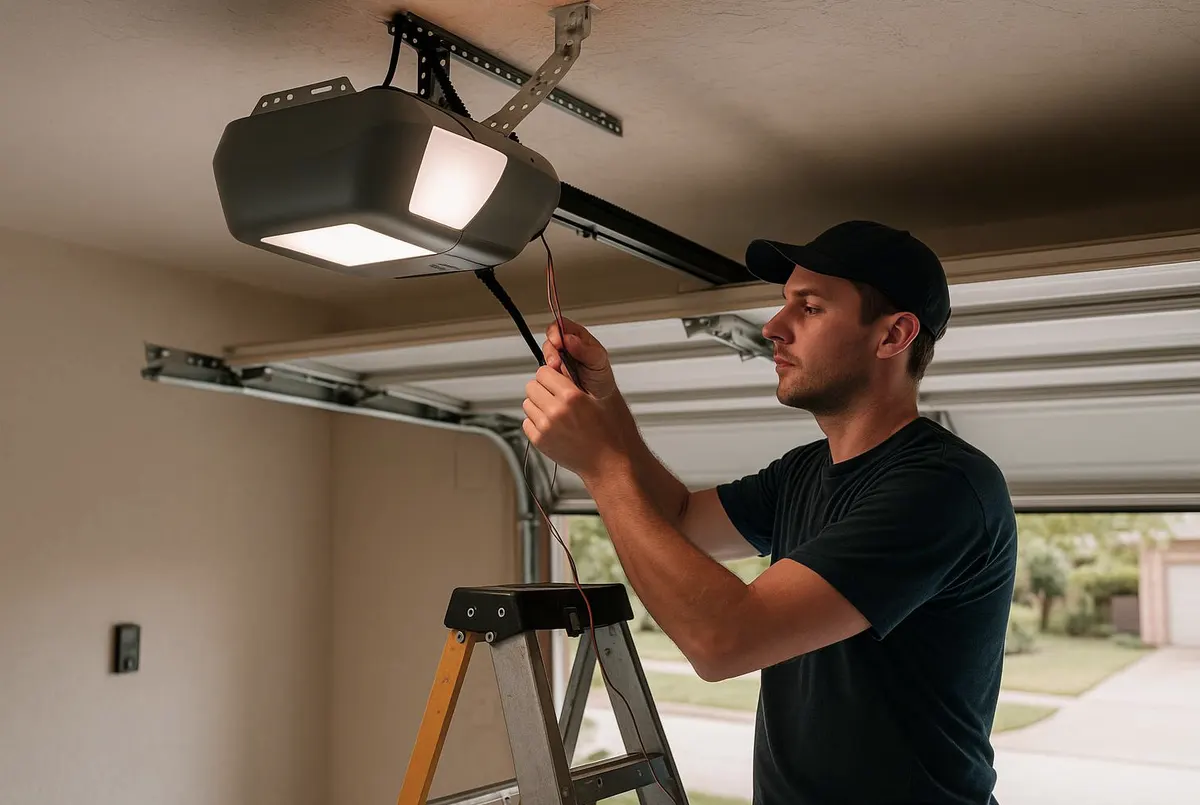
What a technician sees on this call
The call usually starts the same way: one spouse wants to upgrade to an insulated door because the garage feels like an oven in July or a freezer in January. The other spouse thinks it's a waste of money since 'it's just a garage.' When a technician gets out there, the first things checked are whether the garage is attached to the house, whether there's living space above it, whether the HVAC ductwork runs through it, and what the garage actually gets used for — parking two cars, a workshop, a home gym, or just storage for things nobody wants in the house. The answer to the insulation argument almost always comes down to those details, not the door itself.
What R-value actually measures
R-value measures how well a material resists heat flow. The higher the number, the slower heat moves through it. For garage doors, that number applies only to the door panel itself — not the gaps around the edges, not the bottom seal, not the weatherstripping along the sides and top. A door can carry a great R-value on paper and still let in plenty of outside air if the perimeter isn't sealed well. This is the part that trips people up: the door is one piece of a bigger system.
As a general range, single-layer steel doors (no insulation) carry essentially no R-value. Doors with a polystyrene foam core typically land somewhere around R-6 to R-9. Doors with a polyurethane foam core, which is injected and bonded to the steel for extra rigidity, often reach R-12 to R-18. These are general industry ranges, not quotes for any specific door.
Who actually benefits from an insulated door
Insulation earns its keep in a few specific situations:
- Attached garages, especially with a shared wall to a bedroom, laundry room, or living area. Heat and cold transfer through that wall and door more than people expect.
- Garages with living space above them. An uninsulated door lets more heat escape upward in winter and lets more heat build up below in summer, which shows up as an uneven temperature in the room above.
- Workshops, home gyms, or any space where people spend real time. Comfort matters here more than energy savings.
- Garages that store sensitive items — paint, electronics, medications, pet food — that don't do well with wide temperature swings or humidity spikes.
- Homes with HVAC ductwork or equipment in the garage. An insulated door reduces how hard that equipment has to work to keep the connected space comfortable.
Local weather patterns make a few of these points sharper. Humid summers mean an insulated door helps reduce condensation forming on cars, tools, and concrete floors when warm outside air meets a cooler garage interior. Occasional icy mornings in winter mean insulation helps keep pipes, hose bibs, or anything stored near the garage wall from getting dangerously cold on the handful of nights it actually freezes hard here.
Who is paying for nothing
If the garage is detached, has no living space nearby, no HVAC running through it, and only gets used to park a car and store a lawnmower, an insulated door is mostly cosmetic. The temperature swings happen regardless of door insulation, because the rest of the structure — often an uninsulated detached shell — isn't built to hold a temperature anyway. In that case, the money is better spent on:
- New weatherstripping along the bottom and sides, which blocks wind-driven rain and drafts far more effectively than foam core does on its own.
- A properly adjusted bottom seal, especially important with the amount of heavy rain and occasional coastal storm activity this area sees. Water intrusion under the door is a sealing problem, not an insulation problem.
- Basic maintenance — lubrication, hardware checks, balance testing — that keeps the whole system working smoothly regardless of R-value.
The part both spouses usually miss
Insulated doors are heavier than single-layer steel doors. That added weight changes the math on springs and openers. A door that gets upgraded without recalculating spring tension or opener lifting capacity will wear out faster, strain the opener motor, or become unsafe to operate manually if the power goes out. This is the detail that turns a straightforward insulation upgrade into a job that needs a trained eye — it's not just swapping one door for another, it's making sure the whole system is rated to handle the new weight.
Housing stock in this area is a genuine mix of older homes with original single-layer doors and newer construction with insulated doors already installed. For older homes, upgrading is a bigger jump in comfort and performance than for a newer home that already has some insulation and just needs better seals.
When to call Chesapeake Door & Opener
If the argument has moved past 'should we' and into 'which door and what will it need,' that's the point to get a technician out. We handle Garage Door Installation for homeowners upgrading to an insulated door, including recalculating spring tension and opener compatibility so the heavier door operates safely and smoothly from day one. If the real issue is drafts, condensation, or water getting under an existing door rather than the door itself, our Preventive Maintenance visits catch worn weatherstripping and seal problems before they turn into bigger issues — often the actual fix for complaints people blame on 'not enough insulation.'
If you're trying to settle this one at home, give Chesapeake Door & Opener a call. We'll look at your actual garage — attached or detached, living space above or not, current door condition — and tell you straight whether insulation is worth it or whether your money is better spent elsewhere. Serving Chesapeake, VA and the surrounding Hampton Roads area.